As a teenager watching television,
10 years ago, I decided I wanted to dedicate my life to sustainability because
of a single campaign advertised on MTv. Since 2012, I have been working in this
sector from various aspects before returning to study Climate Change in hope of
answering the last pieces to my puzzle. Over the last few months I have
investigated the barriers society has faced in the pursuit of a green future. I
was eager to learn what had been tried and tested, what was successful, what
was in progress and what potential barriers still existed to a green movement
and ultimately future. I noted the significance of climate change within this
pursuit, quoting the 2007
IPCC report in stating that “[climate change] is part of the
larger challenge of sustainable development. As a result, climate policies can
be more effective when consistently embedded within broader strategies designed
to make national and regional development paths more sustainable”.
Showing posts with label sustainable development. Show all posts
Thursday, 5 January 2017
Saturday, 31 December 2016
Our part in a different world
It has been said
that “sustainability is an ideology, a way of thinking, a way of life. It is
not an end product; it is a vision”. There is no denying our progress toward
sustainable development. Yes, there are areas that need to be re-evaluated but
they are far from what they once were. The quest for sustainability is not one
just for conservationists, 'tree huggers', climate change believers or
activists, it is a quest for all of us to maintain the quality of life we so
flippantly enjoy now. If you have not yet grasped what a green future means,
the following video epitomises this vision and the barriers that have
conflicted this movement. In an essence, it is somewhat of a summary of my blog
to date.
My next post will continue to summarise this blog in bringing it to a close. I aim to explain the links between the conflicts discussed here and draw conclusions on whether these barriers towards a green future, having prevented us from achieving sustainability thus far, will continue to hinder our development and prevent us from achieving sustainability in our future.
Wednesday, 21 December 2016
Turning a blind eye
Renewable energies have been praised as the
primary basis upon which sustainability rests. For most of us keen to do our
part in helping to save the planet, we willingly embrace them, but should we be
so naive? Later this week I will critique the three traditional renewable
energies namely solar, wind and hydroelectic energies in upholding the
foundations of sustainability in our goal to maintain our current and future
quality of life. The below cartoon lends a bit of insight into this area!
Saturday, 17 December 2016
Is it conservation?
I once heard 'an error does not become a
mistake until you choose to correct it'. The vision for sustainability is not
without mistakes and sometimes our progress turns out to be merely that of
motion as we learn more about our environment. Last week’s blog discussed how policy and corporate
giants undermine our efforts to sustainably satisfy our needs, in the form of
organic farming. Here I would like to draw similar parallels to our efforts in
sustainable conservation with respect to ecotourism.
![]() |
| Environmental damage by safari vehicles has been found to be cause of the very environment it is trying to preserve. |
Saturday, 10 December 2016
Fools gold
In the last few weeks I have outlined the
causes of limited progress towards a green future as a result of individual perception, economic and political barriers. The recent momentum of
sustainable development having overcome these barriers, is however what most
climate optimists are hanging on to to stay within our environmental threshold.
This optimism is entirely based on the idea that our perception of clean
energies and sustainable developments are as environmentally sound as one is
lead to believe. But are they? At the heart sustainability comes our need for
food production and organic farming has recently been targeted.
An article published last week in New Scientist claimed that those wishing to care for the planet should refrain from supporting organic food production. It's predominant reasoning for slating the farming system was based on the argument that organic farming is less productive per hectare and thus more responsible for GHG emissions. In addition it boasts that if you care about GHG emissions then GM foods are the way forward. Looking towards a sustainable future, if this accusation was true, it would be a worrying dilemma. The article was accompanied by the below video summary.
Saturday, 3 December 2016
Political shifts
Climate change is pre-eminently a political project. The behaviour of humans under the influence of politics is irrefutably fundamental in discussing why it has taken over 20 years to call for climate action through sustainable development with other barriers including public perceptions and economics.
Saturday, 26 November 2016
Internal wars
Thomas Edison famously said
"opportunity is missed by most people because it is dressed in overalls
and looks like work". Attending the Emissions Gap Report Launch some weeks
ago, I felt this was the most prominent message. For countries that do not mine
fossil fuels, a transition to a green economy and future would result in less
fossil fuel imports, greater self-sufficiency and therefore be in their best
interests. Norway's shift to sustainability is a great example of this and at
the launch, Eric Solheim, former Norwegian politician and now
executive director of UNEP said "Climate change is not a cost,
it is a shift. There was no cost to fixing acid rain or ozone. Climate change
is a business opportunity". Norway, boasting the greatest number and
tallest waterfalls in Europe, has a fantastic hydroelectric power potential.
Perhaps it is this potential economic independence that
sustainability offers that is one of the last remaining barriers to green
economies. This blog is a continuation of last
week’s discussion on the suppression of sustainability by economics within the
greater context of three dominant barriers faced by the green movement in the
past.
| Are the days where harvesting energy left landscapes scarred, soon to be a thing of the past? Recent projects are turning these renewable energy production houses in to landscape features, adding a tourism benefit to their green footprint, an ingenius idea! Pictured here is the Øvre Forsland Hydropower Station in Norway. |
Saturday, 19 November 2016
Insouciant economics
When calling for climate action, it is
fundamental that the economics work; money talks. In the past, economics have
been a major conflict towards sustainable developments, so what has changed to
allow for economically sound climate action?
The profitable investments in fossil fuels made the transition to green alternatives difficult as investors have favoured traditional fossil fuel usage due to high returns over the lower returns of sustainable alternatives. In addition, many global economies were and are supported by their fossil fuels exports and a move away from these commodities threatens to send these countries into recession. It is no secret that fossil fuel companies have in the past and continue to lobby politics against participating or promoting green movements, pretending to withdraw their funding to parties, and locking them in to dirty fuel based growth. In a nutshell, fossil fuel investments boasted high returns with little concern for a shift in consumption patterns as promoted by politics. The role of politics in sustainable development is a topic I will cover in the next few weeks, here I would like to focus on how a lack of supportive policy has lead to unfavourable economics and hence little to no sustainable development in the past.
| In 2012, the top 40 mining companies earned a profit of 13 cents per every US$ spent. However, since 2011, oil prices have dropped drastically as a result of over supply and investment uncertainty giving renewables a market opportunity to compete. |
Wednesday, 16 November 2016
Art that speaks
Having discussed in my last blog how our opinions and perceptions have acted as barriers in the past but now changed to bring sustainability to action, its time to put our money where our mouths are! Later this week I will be looking at the role of economics as a barrier in achieving a green path in the past to our present. This street art pictured below gives you an idea of what it looks like!
Saturday, 12 November 2016
We are change
Leonardo
DiCaprio, a UN messenger of Peace on climate change, addressed the leaders of
today at the Paris Agreement in December 2015 in his recent documentary stating "The world is
now watching, you will either be lauded by future generations or vilified by
them. You are the last, best, hope of Earth. We ask you to protect it, or we
and all living things we cherish, are history." In the documentary he
questioned whether they will change our course to one of greater sustainability, but most of all, whether it will be in time. Twenty years
ago, this sense of urgency was not present. So what has changed?
| Climate protests have been gaining momentum over the past 2 years with the Global Climate March in December 2015 being the largest environmental movement in history with approximately 785 000 protesters in 175+ countries taking part in the event. In Paris, protesters were banned from marching and left 20 000 pairs of shoes in the street, demonstrating their participation. |
Saturday, 5 November 2016
An end to intent
'Without
action, the best intentions in the world are nothing more than that:
intentions' - wise words from Jordan Belfort. This week there has been a surge
in climate change publicity, through launches of the 1 Gigaton Coalition Report, The Emissions Gap Report, and Before the Flood to name a few, all of
which have called for action. After 21 years of negotiations and research, time
has run out and panic is duly starting to set in as we witness the first real
consequences of climate change through social media platforms, but why has it
taken so long to call for action? I believe it is a result of a combination of
3 main factors - public opinion, economics and politics.
![]() |
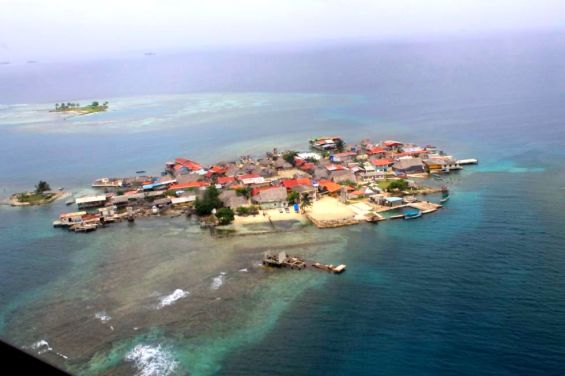
| In 2015, Pacific Island nations appealed to wealthy countries to assist with climate associated migrations and employment as islanders leave amidst rising sea levels. Guna Yala pictured here, has started preparations for relocation due to sea level rise of 2cm/annum. |
Subscribe to:
Posts (Atom)