Showing posts with label renewable energy. Show all posts

Thursday, 5 January 2017

A day will come

As a teenager watching television, 10 years ago, I decided I wanted to dedicate my life to sustainability because of a single campaign advertised on MTv. Since 2012, I have been working in this sector from various aspects before returning to study Climate Change in hope of answering the last pieces to my puzzle. Over the last few months I have investigated the barriers society has faced in the pursuit of a green future. I was eager to learn what had been tried and tested, what was successful, what was in progress and what potential barriers still existed to a green movement and ultimately future. I noted the significance of climate change within this pursuit, quoting the 2007 IPCC report in stating that “[climate change] is part of the larger challenge of sustainable development. As a result, climate policies can be more effective when consistently embedded within broader strategies designed to make national and regional development paths more sustainable”. 
Image result for solar panel huts
The provision of solar panels to poor communities has improved the quality of life, reduced their carbon footprint (predominantly through forest clearing and burning for/of wood) and consequently, the reduced their contribution to climate change.

Saturday, 31 December 2016

Our part in a different world

It has been said that “sustainability is an ideology, a way of thinking, a way of life. It is not an end product; it is a vision”. There is no denying our progress toward sustainable development. Yes, there are areas that need to be re-evaluated but they are far from what they once were. The quest for sustainability is not one just for conservationists, 'tree huggers', climate change believers or activists, it is a quest for all of us to maintain the quality of life we so flippantly enjoy now. If you have not yet grasped what a green future means, the following video epitomises this vision and the barriers that have conflicted this movement. In an essence, it is somewhat of a summary of my blog to date.


My next post will continue to summarise this blog in bringing it to a close. I aim to explain the links between the conflicts discussed here and draw conclusions on whether these barriers towards a green future, having prevented us from achieving sustainability thus far, will continue to hinder our development and prevent us from achieving sustainability in our future.

Saturday, 24 December 2016

Sustainable vs renewable

The last two weeks I have focused on the key elements to a sustainable future:our ability to sustain our needs and our wild areas and the misconceptions of perceived sustainable practices within them. The last requirement to attaining a smooth transition to a green future, is maintaining our current quality of life. I would like to discuss some of the developments that are playing a major role in sustainability and whether they will truly embrace the concept. Here I focus on renewable energies.

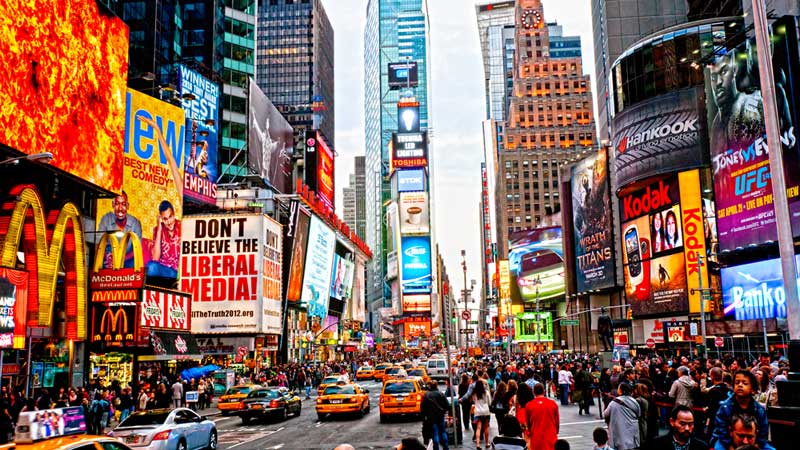
Image result for new york time square
Rather than encouraging behavioural changes, renewable energies ensure that our current consumerism ideals are catered to in a more environmentally friendly manner. On closer inspection, one may question whether this true.

Undoubtedly one of the biggest obstacles to a green future is our willingness to consume less, many believe that decreased consumption negatively affects quality of life. This needs to change if we are to achieve and sustain a good quality of life for 8.5 billion people but until such a time, green technologies have allowed us to remain on this path which we excuse because they have less health and environmental impacts than previous technology. But how sustainable are they? Lets consider the top traditional renewables; solar, wind and hydroelectric power. 

Wednesday, 21 December 2016

Turning a blind eye

Renewable energies have been praised as the primary basis upon which sustainability rests. For most of us keen to do our part in helping to save the planet, we willingly embrace them, but should we be so naive? Later this week I will critique the three traditional renewable energies namely solar, wind and hydroelectic energies in upholding the foundations of sustainability in our goal to maintain our current and future quality of life. The below cartoon lends a bit of insight into this area!


Saturday, 26 November 2016

Internal wars

Thomas Edison famously said "opportunity is missed by most people because it is dressed in overalls and looks like work". Attending the Emissions Gap Report Launch some weeks ago, I felt this was the most prominent message. For countries that do not mine fossil fuels, a transition to a green economy and future would result in less fossil fuel imports, greater self-sufficiency and therefore be in their best interests. Norway's shift to sustainability is a great example of this and at the launch, Eric Solheim, former Norwegian politician and now executive director of UNEP said "Climate change is not a cost, it is a shift. There was no cost to fixing acid rain or ozone. Climate change is a business opportunity".  Norway, boasting the greatest number and tallest waterfalls in Europe, has a fantastic hydroelectric power potential. Perhaps it is this potential economic independence that sustainability offers that is one of the last remaining barriers to green economies. This blog is a continuation of last week’s discussion on the suppression of sustainability by economics within the greater context of three dominant barriers faced by the green movement in the past.

norway, Øvre Forsland, hydroelectric power plant, hydropower, norway renewable energy, tourism
Are the days where harvesting energy left landscapes scarred, soon to be a thing of the past?  Recent projects are turning these renewable energy production houses in to landscape features, adding a tourism benefit to their green footprint, an ingenius idea! Pictured here is the Øvre Forsland Hydropower Station in Norway.

Saturday, 19 November 2016

Insouciant economics

When calling for climate action, it is fundamental that the economics work; money talks. In the past, economics have been a major conflict towards sustainable developments, so what has changed to allow for economically sound climate action?

The profitable investments in fossil fuels made the transition to green alternatives difficult as investors have favoured traditional fossil fuel usage due to high returns over the lower returns of sustainable alternatives. In addition, many global economies were and are supported by their fossil fuels exports and a move away from these commodities threatens to send these countries into recession. It is no secret that fossil fuel companies have in the past and continue to lobby politics against participating or promoting green movements, pretending to withdraw their funding to parties, and locking them in to dirty fuel based growth. In a nutshell, fossil fuel investments boasted high returns with little concern for a shift in consumption patterns as promoted by politics. The role of politics in sustainable development is a topic I will cover in the next few weeks, here I would like to focus on how a lack of supportive policy has lead to unfavourable economics and hence little to no sustainable development in the past. 

Image result for net profit margins top 40 mining companies
In 2012, the top 40 mining companies earned a profit of 13 cents per every US$ spent. However, since 2011, oil prices have dropped drastically as a result of over supply and investment uncertainty giving renewables a market opportunity to compete.